Campaigns look busy, but post-event review is still subjective
Traffic totals alone do not reveal zone migration, dwell change, spillover effects, or what to tune next time.
SuKeYun connects to existing video feeds and business systems to turn campaign review, path optimization, storefront dwell, parking coordination, and on-site response into one shared operating view for planning, operations, leasing, property, security, and IT.
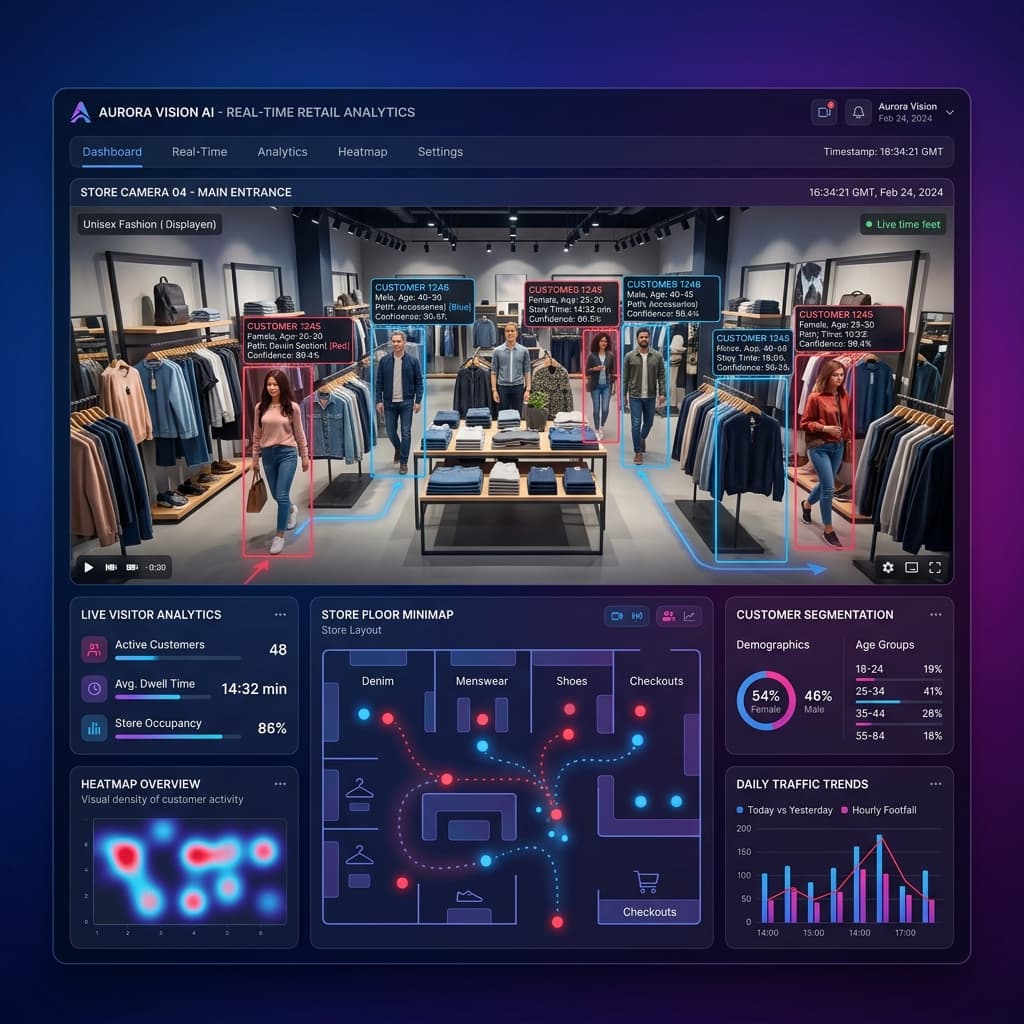
A unified operating view brings departments onto one shared picture of reality.
We typically begin with campaign review, key-zone dwell, route breakpoints, or peak-time coordination so the first result lands quickly with the business team.
The more mature the project, the easier it becomes to accumulate systems that do not drive daily operational decisions.
Traffic totals alone do not reveal zone migration, dwell change, spillover effects, or what to tune next time.
Pass-by, dwell, entry, return, and dead zones often live in separate systems.
Queues, congestion, unusual lingering, and patrol timing are rarely connected to business rhythm.
A deployable solution must coexist with video, loyalty, parking, property, and BI systems already in place.
Not everyone needs the same interface, but everyone should work from the same field truth.
Turn pre/post event heat, spillover impact, and hourly performance into board-ready review output.
The system is organized around the business questions commercial venues most often need to answer.
Link event heat, dwell, zone migration, nearby tenant lift, and next-day change into one review flow.
Understand first choice after entry, key-zone return, route breakpoints, and hot/cold imbalance.
Track pass-by, dwell, entry, and adjacency effects to judge attraction and location quality.
Connect on-site behavior to coupons, invites, and follow-up content delivery.
Trace arrival efficiency and peak structure from vehicle entry to target zone arrival.
Place rent, property fee, contract milestones, and tenant operating heat into one business view for priority decisions.
Close the loop between queueing, congestion, unusual lingering, patrols, and work orders.
Bring repair, complaint, hygiene, and fit-out requests into one service workflow for mall-side teams.
Member, billing, patrol, and merchant issue systems do not need to live as disconnected tools. They can sit beside traffic-driven operating intelligence as one clearer digital stack.
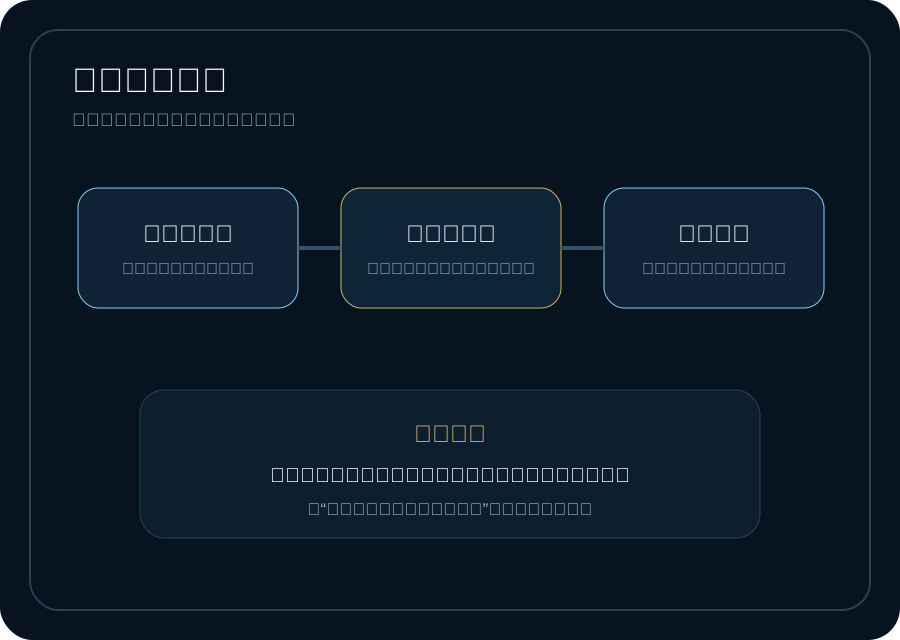
Connect on-site arrival, dwell, and participation with coupons, loyalty points, and follow-up content so one visit can lead to another operating action.

Place rent, property fee, contract milestones, and tenant operating heat in one view so mall teams can prioritize billing follow-up and merchant communication.
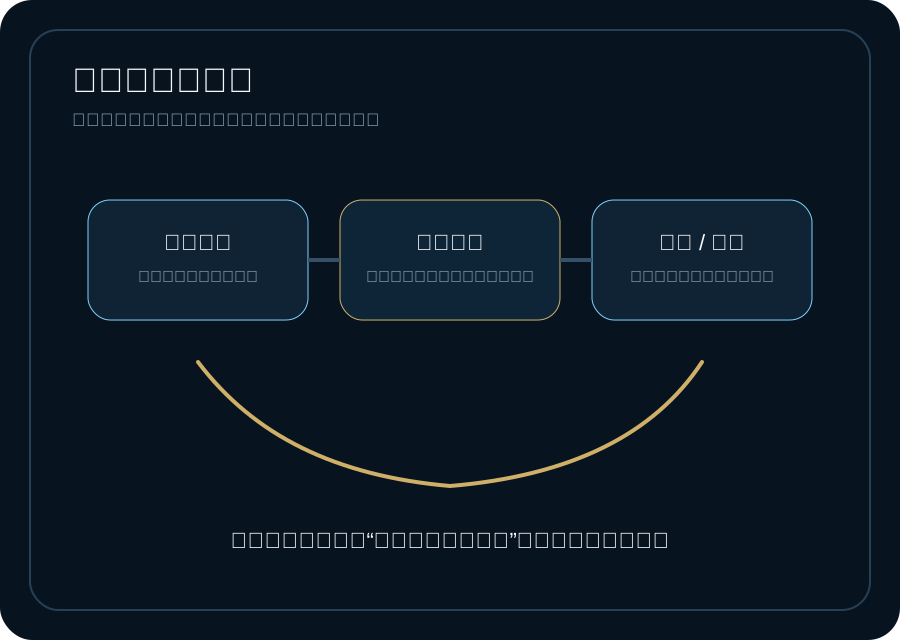
Connect queues, congestion, unusual lingering, and field work orders so property and security teams can react earlier during peaks.
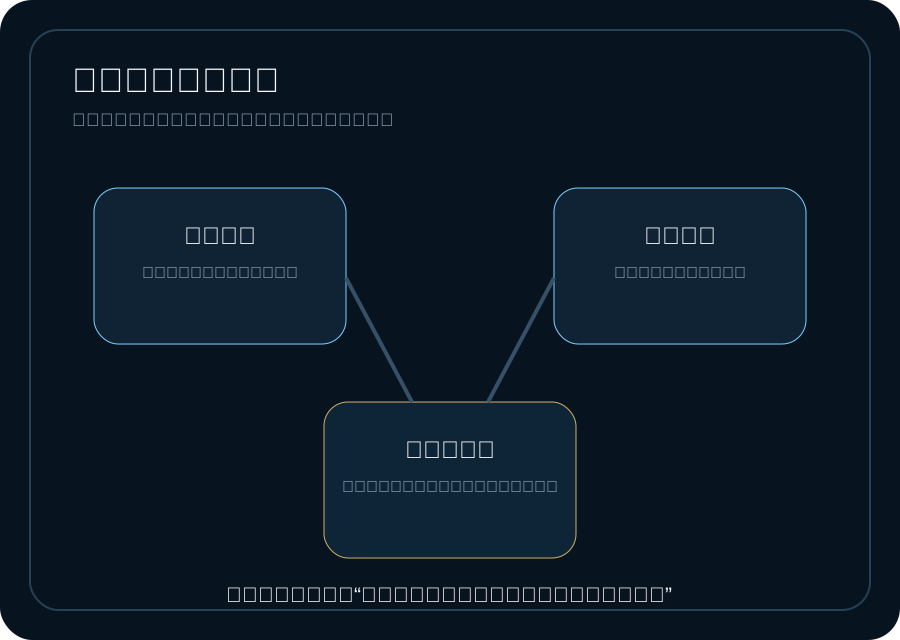
Bring repairs, complaints, hygiene, fit-out, and opening readiness requests into one coordination view for leasing, operations, and property teams.
We organize the solution around business objectives, not camera counts.
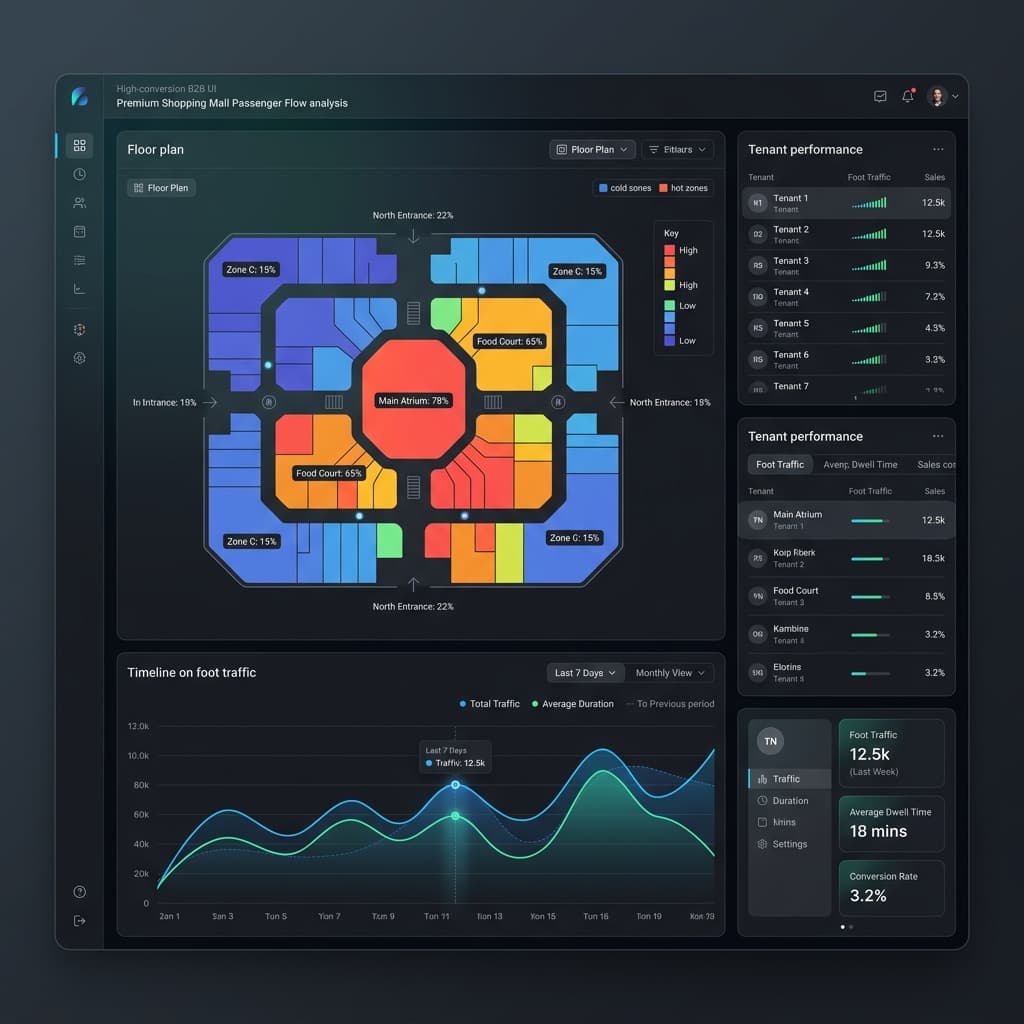
Support campaign review, floor routing, cold-zone activation, parking coordination, and cross-team alignment.
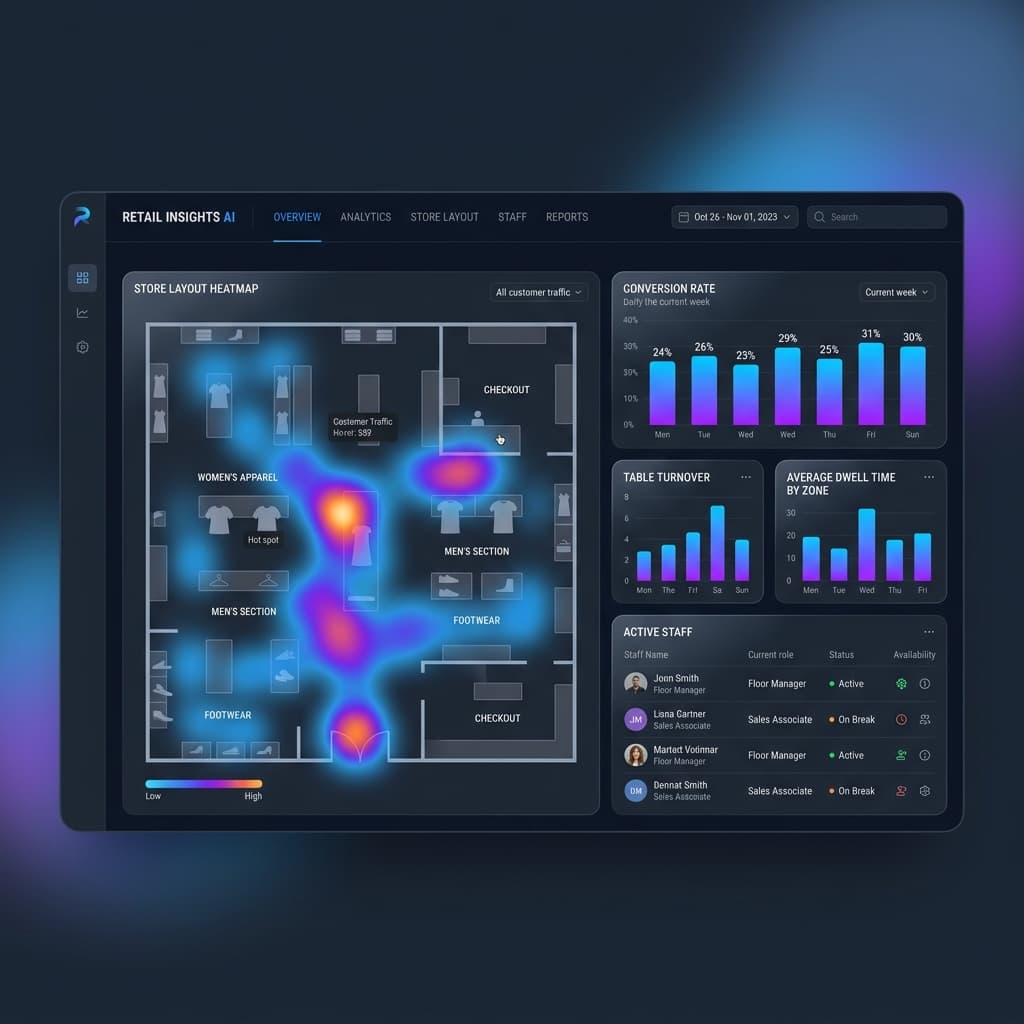
Focus on facade attraction, display change, staffing, key shelf zones, and loyalty activation.
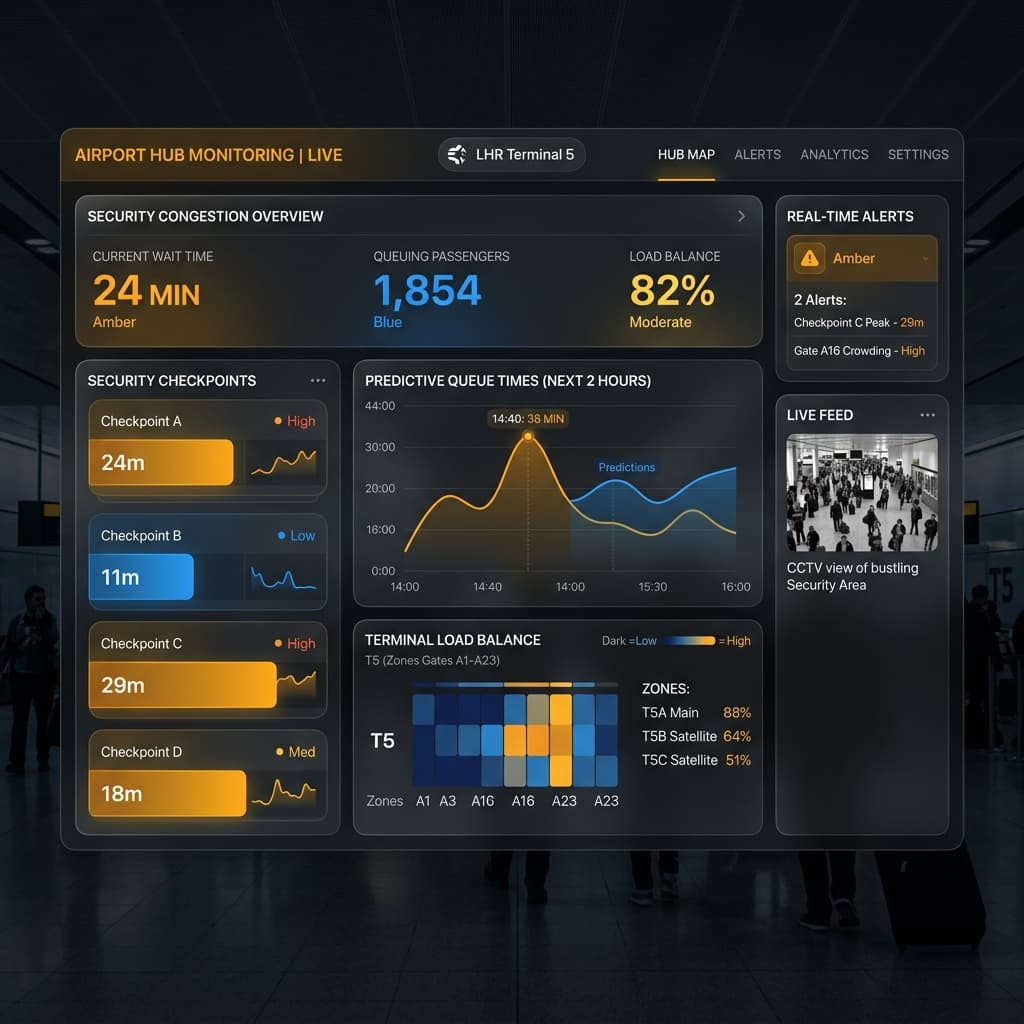
Focus on queues, peaks, unusual lingering, public order, and crowd guidance.
Mature projects want to avoid duplicate investment, so the integration model starts with sidecar coexistence.
Prove one result the business team wants to reuse, then decide what to scale.
Do not disturb existing systems. Prove one or two scenarios that matter most.
Bring the working pattern into event zones, key storefronts, cold zones, or peak areas.
Once the business team adopts it, extend it across projects and systems with a shared data model.
We care more about long-term operational usage than launch-day excitement.
Within 24 hours after an atrium event, the team could see nearby tenant lift, heat migration, and floor-level effects.
Managers optimize staffing and displays using dwell changes, entry efficiency, and peak-period performance.
Peak zones can be identified in advance so field teams can act earlier.
SuKeYun focuses on spatial behavior and operational response rather than identity. The platform supports anonymous trajectory analysis, permission controls, audit logs, edge deployment, and private deployment.
Business teams see operating outcomes, field teams see on-site coordination, and IT manages access and audit.
Start with a pilot or roll out directly by campus or site with private deployment.
These are usually the questions that decide whether a project starts with a pilot.
Traditional traffic tools often stop at counting and dashboards. SuKeYun focuses on turning field behavior into operating action such as campaign review, member activation, rent follow-up priority, patrol coordination, and merchant issue workflows.
Usually no. SuKeYun is designed to coexist with your current video, loyalty, billing, patrol, and merchant collaboration systems, then connect the chains that matter most for the first scenario.
Shopping malls, retail networks, transport hubs, and destination complexes can all use the platform, but each starts from a different business problem. Malls often begin with campaigns, members, billing, and merchant coordination; open venues often begin with peak order and patrol linkage.
Yes. The product is designed around spatial behavior and operating action rather than identity. It supports edge deployment, private deployment, permission isolation, auditability, and dedicated controls for private proposal pages.